If you've played the Dye Course at the Country Club of Landfall sometime in the last year and felt like something was off, in a good way, you weren't imagining it. The bunkers look sharper. The angles into a few greens ask a different question than they used to. None of it happened overnight, and none of it happened by accident. It happened because the club spent the better part of several years handing the course, hole by hole, to the one person alive who could tell you what Pete Dye actually meant when he built it.
That person is Chris Lutzke, and the distinction matters more than it sounds like it should. A course can be renovated by anyone with a good design eye and a construction budget. A course can only be restored by someone who watched the original architect make the calls in real time. Landfall chose the second option, and the choice says something about how this club thinks about its own history, whether or not you've ever set foot on the property.
The Three-Year Project That Never Closed the Course
Trade press covering the golf construction industry picked up on the Landfall project back in late 2023, and even then the work was already three years deep. CR Lutzke Golf, the firm Chris Lutzke built after three decades working alongside Dye on courses like Blackwolf Run and The Ocean Course at Kiawah Island, had been rebuilding bunkers and greens at Landfall nine holes at a time. The club has 45 holes across two courses, and the crews structured the entire project around a promise to members: 36 holes stay open, always. That's a logistics problem most golf renovations don't have to solve, since most clubs only have one course to protect. Landfall had the luxury of rotating work through its Dye and Nicklaus layouts without ever telling its membership to find somewhere else to play for a season.
That kind of phasing is slow by design. It's also the reason the restoration didn't make headlines when it started. There was no ribbon cutting, no closure announcement, just quiet, sectioned work that most members noticed only in the holes they happened to be playing that month.
Restoring Versus Renovating, According to the People Who Do Both
CR Lutzke Golf takes on both kinds of projects, and the firm's leadership has been direct about what separates them.
"We are either renovating a golf course or restoring one. Many times, we do go in and restore a course to what Pete Dye meant for it to be when it was built, but there are a lot of owners that want to renovate their course into one that they can sustain."
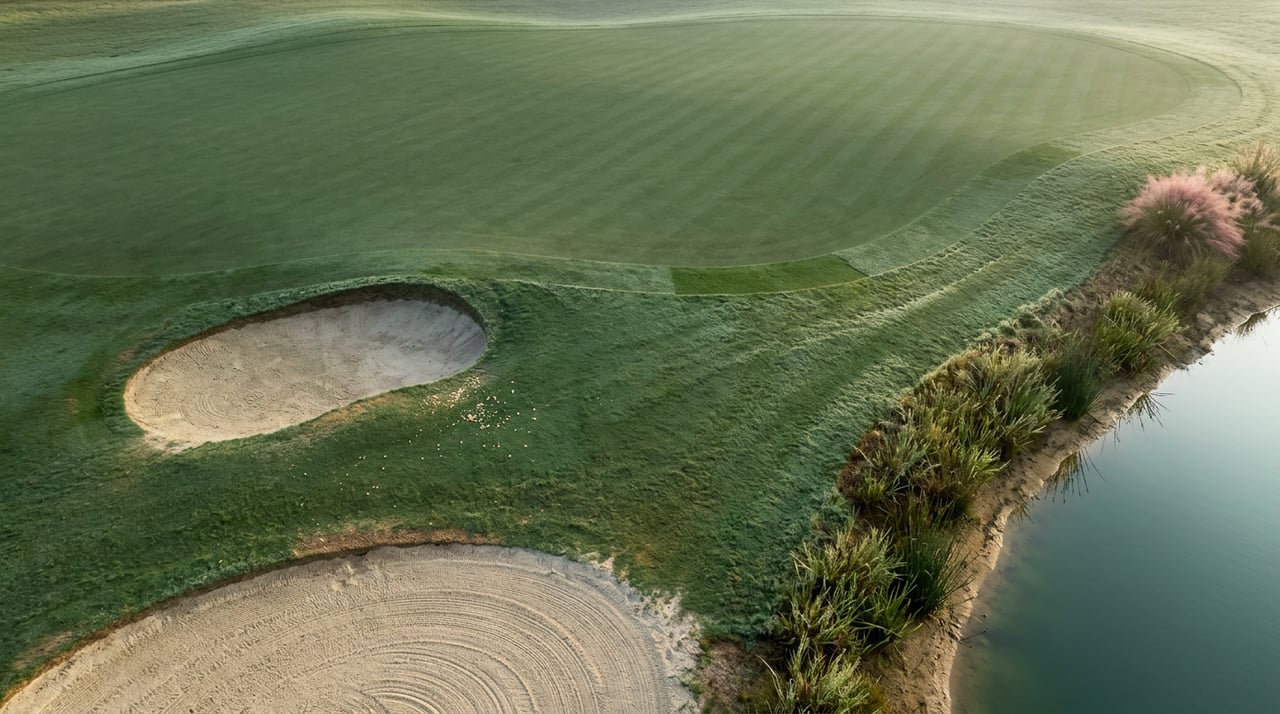
The same conversation touched on something specific to Dye's era of design: golf in the 1980s and 90s often meant acres of bunkers, more than most modern maintenance budgets or superintendent staffs can reasonably keep up. The fix isn't to strip a course of its character. It's to keep the strategic bite, the sightlines and angles that make a hole demanding, while trimming the sheer square footage of sand that has to be raked and edged every week. That's the operating philosophy behind the Landfall project: preserve what made Dye's design dangerous, retire what just made it expensive.
For a course built in 1987 by Pete Dye, P.B. Dye and Bobby Weed, that's not a small ask. The back nine still carries Dye's fingerprints in the water hazards guarding the greens at 15 and 16, and the par-5 18th still rewards the player willing to gamble on reaching the green in two, with a deep bunker waiting for anyone who misses right. Those are the moments a restoration is built to protect. The acres of extra sand around them were never the point.
Why Landfall Is Part of a Bigger Story This Year
Landfall's project isn't happening in isolation. Golf industry coverage earlier this year grouped it inside a wider wave of restoration work moving through Dye's surviving courses nationally, timed loosely to what would have been his hundredth birthday last December. The pattern shows up at:
- Crooked Stick Golf Club in Carmel, Indiana, restored in 2025 by architect Tom Doak
- Delray Dunes Golf and Country Club in Boynton Beach, Florida, restored in 2024 by Scot Sherman
- Long Cove Club on Hilton Head Island, restored by Bobby Weed
- Harbour Town Golf Links, which reopened in November 2025 ahead of the 2026 RBC Heritage
- Casa de Campo's Teeth of the Dog in the Dominican Republic, closed for nearly all of 2025 for a comparable restoration
Dye passed away in January 2020. The architects doing this work almost all learned directly from him, which is precisely why the industry is treating these projects as a moment worth tracking rather than routine course maintenance. Landfall's Dye Course sits in that same company, restored by someone who was there when Dye built it rather than someone interpreting his drawings decades later.
The Clubhouse Already Set the Precedent
If the golf course restoration feels consistent with how Landfall handles its history, that's because it is. The club made the same call once before, with the building that overlooks the ninth hole of the Dye Course.
The Dye Clubhouse, built in 1988 as Landfall's first, took on damage from Hurricane Florence in 2018 and closed. The conversation that followed included a real option to tear it down and build something smaller and easier to maintain. The board chose otherwise. As general manager Jessi Reutter described it at the time, the decision was to preserve the building's history through renovation rather than replace it outright. Architect John Murray of Bowman Murray Hemingway led the work, opening up sightlines to the golf course that the original building had never taken advantage of, and a casual dining venue called Pete's now occupies the first level. The clubhouse also happens to be part of the property's screen history: the course and clubhouse appeared across six seasons of Dawson's Creek, filmed in the Wilmington area during the show's run.
Put the two projects next to each other and a pattern emerges that has nothing to do with square footage or budgets. When something at Landfall is worth keeping, the club's instinct is to restore it, not replace it. That instinct held for a hurricane-damaged clubhouse in 2018, and it held for a nearly forty-year-old Dye layout that could have been renovated into something easier to mow.
What to Notice Next Time You're on the Dye
None of this requires a golf history lesson to appreciate on the course itself. The next time you're standing on the tee at 15 or 16, the water hazards guarding those greens are the same strategic decisions Dye made in 1987, refreshed rather than redesigned. On 18, the risk-reward calculation off the tee, lay up short or gamble on reaching the green in two, is the same one Dye built into the hole from the start. What's changed is the ground under your feet: bunkers and greens rebuilt section by section rather than patched over year after year.
For a club with more than 1,700 memberships and over 5,000 individual members using the facilities, that kind of quiet, phased investment is also a signal about the depth of commitment behind the amenities that come with living in this community. A private, member-owned club with a $25 million operating budget doesn't take on a multi-year restoration project lightly, and the fact that Landfall chose to do it right, using someone who trained directly under the original architect, tells you something about how this place is run long after the last bunker gets its final coat of sand.
If you're curious what else has changed inside the gates lately, or you're weighing what Landfall living actually looks like day to day, Austin Kenyon can walk you through it. Schedule a private consultation whenever you're ready to talk specifics.